
What Is Game LiveOps? A Complete Guide for Studios

The post-launch engine of events, experiments, and feature flags that keeps players coming back.
What is LiveOps in gaming?
LiveOps in gaming is the practice of operating your game as a live service after launch. You capture how players behave, group them into audiences, and change the game to fit them. That means new events, tuned rewards, and features you test first. It turns a static release into a product that keeps evolving.
A shipped game used to be the finish line. For a live game, launch is the starting line. The build you release on day one is the first version players ever see. Everything after that is game LiveOps: the events you run, the offers you drop, the features you test before rolling them wide.
What does LiveOps mean?
A LiveOps team lives in the game every day. They run a weekly tournament, drop a limited-time offer, or roll a new feature to a small audience first. LiveOps is short for live operations. Here is what that looks like inside a live team’s week:
- Schedule a weekend tournament and set the prize pool.
- Drop a limited-time offer tied to a seasonal event.
- Roll a new feature to a small slice of players before deciding whether to ship it wide.
- Message players in-game when a new event or patch goes live.
- Tune the economy after watching how players spend or hoard currency.
None of that ships in the original build. All of it happens live, on players who are already playing a game your team shipped months or years ago.
The core components of a game LiveOps platform
LiveOps in games rests on four core components. A LiveOps platform for games bundles them into one system, and each one feeds the next.
- Event capture. The pipeline that ingests what players do, from session starts to purchases. Our Satori platform captures these events at high throughput and can export raw data to data lakes such as Snowflake, BigQuery, and Redshift.
- Segmentation and audiences. The engine that turns events into player groups. You define audiences with filter rules, and those audiences refresh on their own as players keep playing.
- Experiments and feature flags. The system that tests changes. You run multi-phase experiments against chosen audiences, then promote a winning variant to a permanent feature flag. This is what makes feature flags for games different from a simple on/off toggle: the flag is tied to an audience and an experiment result, not a manual switch.
- Analytics and retention. The dashboards that tell you if any of it worked. Retention cohorts, funnels, and custom metrics show where players stay and where they drop.
| Component | What it does | Example studio action | Typical owner |
|---|---|---|---|
| Event capture | Ingests what players do, from session starts to purchases | Export raw event data to a warehouse for deeper analysis | Engineering and data team |
| Segmentation and audiences | Turns events into player groups that refresh as players keep playing | Build an audience of players who spent once but have not returned in seven days | Live team |
| Experiments and feature flags | Tests changes against chosen audiences, then promotes a winner to a permanent flag | Run a multi-phase experiment on a new reward curve before rolling it to everyone | Live team with engineering support |
| Analytics and retention | Shows where players stay and where they drop through cohorts and funnels | Pull a retention cohort after a new event to see if it moved day-seven retention | Data and analytics team |
How does game LiveOps work?
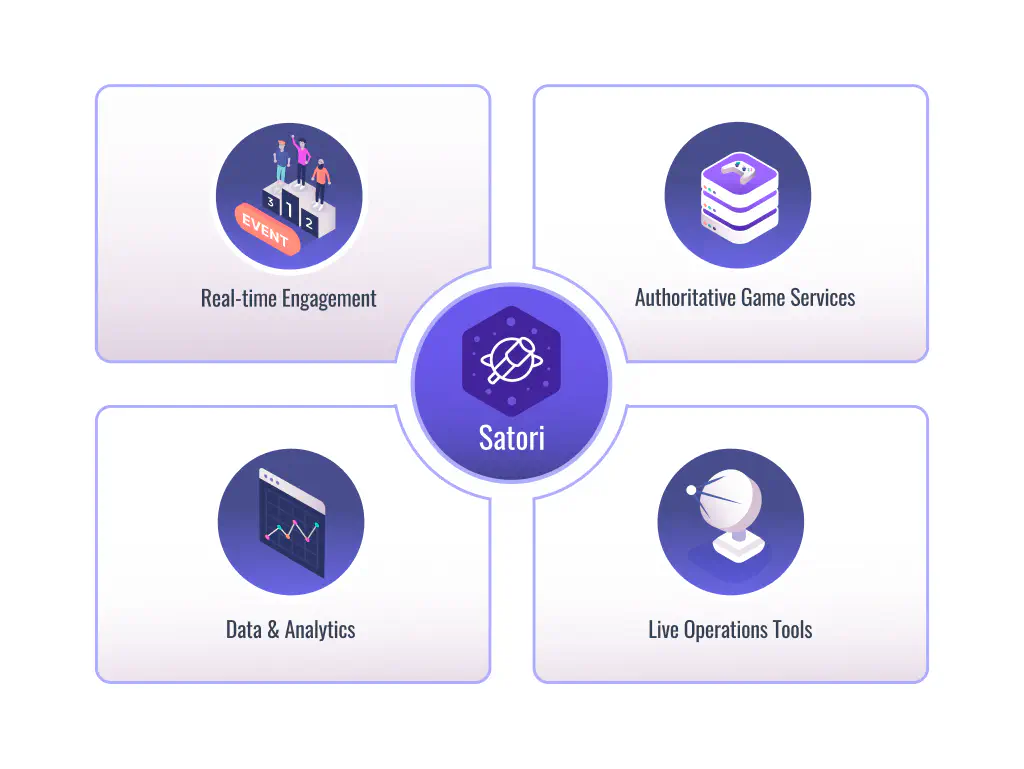
Game LiveOps works as a loop. You capture player events, then sort players into audiences. From there you serve live events, feature flags, and experiments to the right groups. You measure the result, and you feed that result into the next change.
That loop is LiveOps explained in plain terms. You capture data, you target the right players, and you test changes before rolling them wide. The platform recomputes each player’s audience membership as new events arrive, so targeting always reflects the latest player state.
The loop in five steps:
- Capture. Log what a player does the moment it happens. A mobile RPG logs every level attempt, win, and loss.
- Segment. Group players by that behavior. The same RPG groups players who failed a level three times in a row.
- Configure. Set a live event, offer, or feature flag for that segment. The RPG serves that group a temporary difficulty boost or a bonus reward.
- Measure. Track whether the change moved the metric that mattered. The RPG checks completion rate and next-session return rate for that segment.
- Iterate. Feed the result into the next change. The RPG keeps the boost if it worked, or tests a different offer if it did not.
The payoff is speed without a code deploy. When a player checks in, the platform evaluates their eligibility for each live event and experiment at that moment. While an event runs, remote configuration lets you change reward values or targeting in real time. That is remote config for games: change what players see without shipping a new build or waiting on app store review. Your live team does this in a console, and your engineers stay on the game.
Why is LiveOps important for games?
LiveOps is important because retention drives the economics of a live game, and retention is something you operate, not something you ship once. A game that never changes gives players a reason to leave. A game that runs events and tests improvements gives them a reason to come back.
The money follows retention. Depending on the study and the industry, acquiring a new customer costs five to 25 times more than keeping an existing one. Research from Bain, cited in the same Harvard Business Review piece, shows a 5% lift in retention can raise profit by 25% to 95%. That lift comes from the events, offers, and features your LiveOps team ships every week.
The trend backs this up. Newzoo’s Global Games Market Report shows live-service titles capturing a growing share of total playtime and spending, with the market putting more weight on retention and payer conversion. Games that keep players engaged for years are the ones taking that share.
Experimentation is how you find the wins you would otherwise miss. Harvard Business Review documented a Bing headline change that sat shelved as a low priority until an engineer ran a quick A/B test. It lifted revenue by 12%, worth more than $100 million a year, and became the best revenue idea in Bing’s history. A LiveOps game runs on the same logic. You test a reward, a difficulty curve, or an offer against a control. Then you keep what the data proves.
Where our Nakama and Satori fit
Here is where our stack fits. Our Nakama is the open-source backend that runs your multiplayer, social, and storage systems. Our Satori is the LiveOps platform that pairs with it. Nakama publishes player events to Satori, and Satori feeds back feature flags and experiment variants, so the game personalizes in real time.
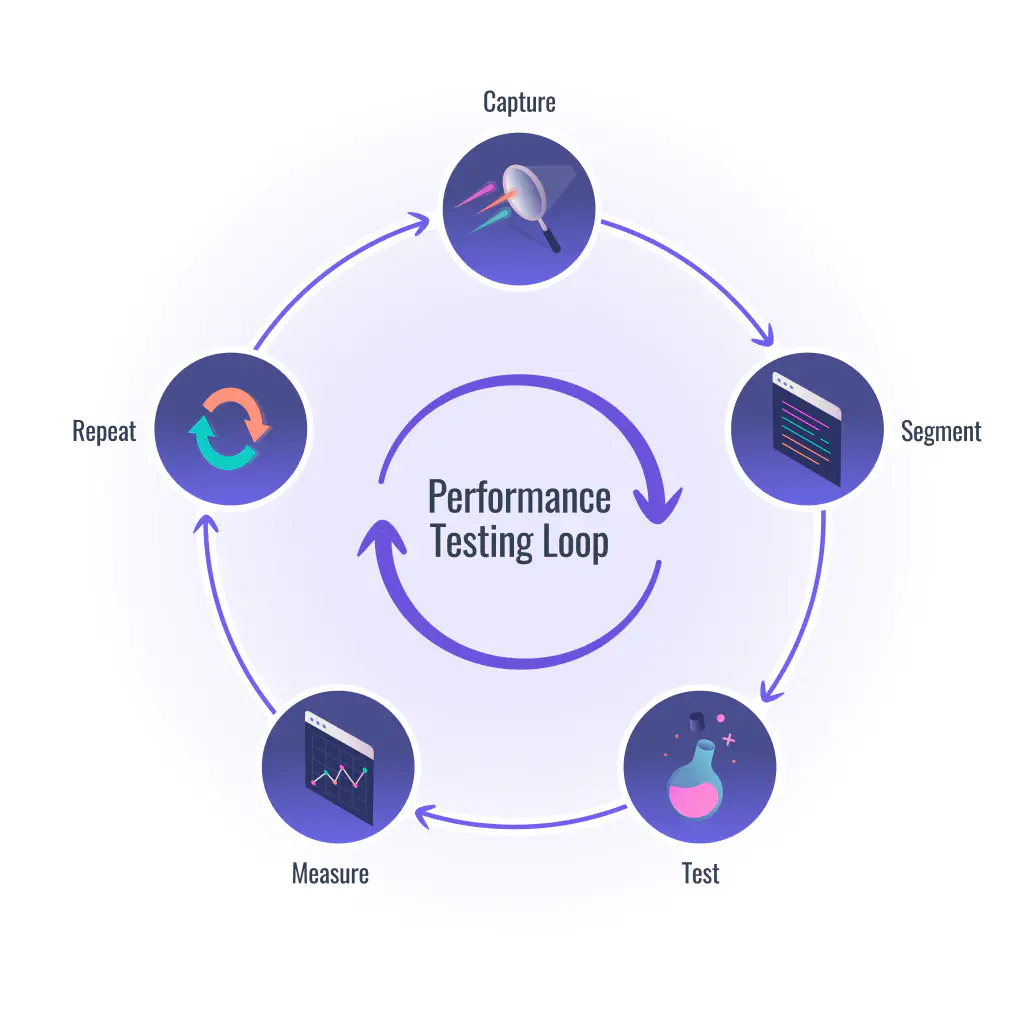
Satori gives your live team event capture, player segmentation, and an experimentation engine in one console. Feature flags and live events run from the same place, and the whole thing sits next to our Hiro metagame toolkit if you want prebuilt economy and reward systems. Sergei Vasiuk, Director of LiveOps at Wargaming, describes Satori as a sophisticated, scalable way to personalize player experiences without constantly pulling in the engineering team.
The part that matters most is ownership. You run Satori on hardware you control, on our Heroic Cloud or your own private cloud, and you own your data. No black box. Our Nakama core stays open source, so your backend is yours whether you self-host or take the managed path. You can read how the pieces connect in the Satori documentation.
Build versus buy: should you build LiveOps yourself?
You can build LiveOps yourself. The real question is whether you should. A production LiveOps stack means an event pipeline, a segmentation engine, and an experimentation system, plus the dashboards to read all of it. Here is how the two paths compare.
| Path | What it means | Rough timeline | Best for |
|---|---|---|---|
| Build | Build your own event pipeline, segmentation engine, and experimentation system in-house | Multi-year effort before you ship a single event | Studios with a very specific need and the engineers to maintain it for years |
| Buy | Adopt a managed LiveOps platform and configure it instead of building it | Weeks to get your first event live | From small studios through mid-size teams, publishers, and enterprise game orgs |
Buy scales with the org. Satori runs on Heroic Cloud with your own private cloud as an option, so growing up doesn’t mean giving up ownership of your data.
This is the kind of work that keeps a team busy for a long time. Our own team has logged more than 243,000 hours of engineering to build and run this stack, and that is what a full build asks of your team too. Satori is the buy path: a managed LiveOps layer that pairs with our open-source Nakama core, so you get there faster without losing control of your backend or your data.
FAQ
Do you need Nakama to use Satori?
Is LiveOps only for mobile games?
What is the difference between LiveOps and DevOps?
When should a studio start LiveOps?
Built for live games
See how Heroic Labs helps studios run LiveOps that move retention and revenue.
Walk through Satori: retention and RoAS analytics, audiences, A/B tests, and live events in one LiveOps workflow. Book a demo to see it in action.
- SOC 2 Type II certified
- Audiences, A/B tests & live events in one platform
- Supporting $5B+ in games revenue
