
February 2026 Newsletter: AAA Launches, Heroic Cloud 2.0, and more

We kicked off 2026 by helping launch a AAA shooter across three platforms and shipping Heroic Cloud 2.0.
This newsletter covers all that and more, including new case studies about studios cutting development time in half and product updates across the entire stack. Let’s dive in.
☁️ Completing the 2.0 Era: Heroic Cloud
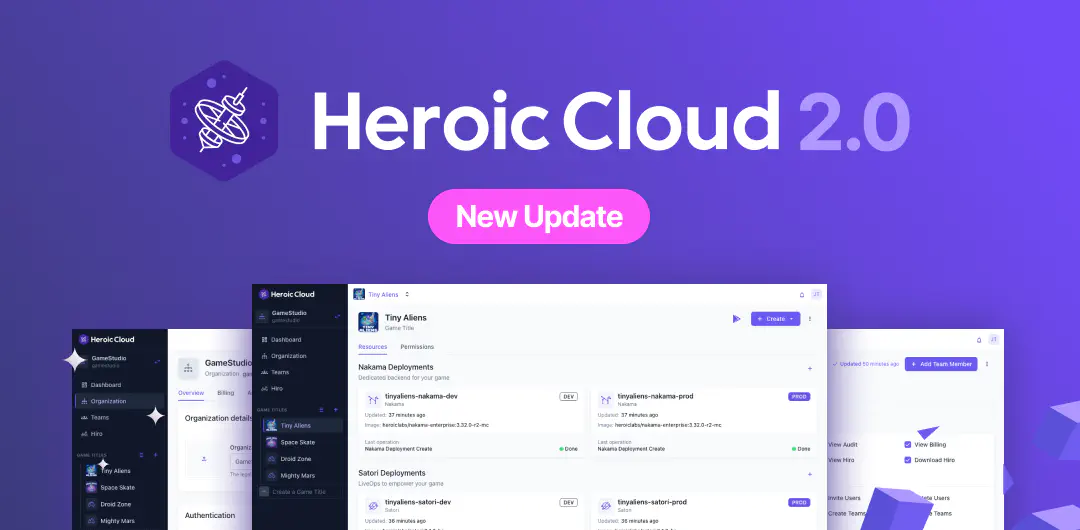
Over the past year, our products have been getting much-needed makeovers, from the Nakama Console refresh to the slicker Satori dashboard. We’re thrilled to finally unveil the last piece of the puzzle: Heroic Cloud 2.0.
This is a complete reimagining of our cloud dashboard built around how game studios actually work. Here’s what’s new:
- Title-based organization: All projects, resources, and permissions are organized around individual game titles instead of flat lists.
- SSO and SAML support: Single Sign-On for identity providers like Okta, Azure AD, and Google Workspace, plus Directory Sync that mirrors your employee directory.
- Teams and granular permissions: Define permission groups once, assign users by role, and control access at the organization, title, or individual resource level.
- Redesigned interface: Spinning up new projects and managing existing ones is way more straightforward.
🤩 Community Highlights
Celebrating the Launch of Highguard
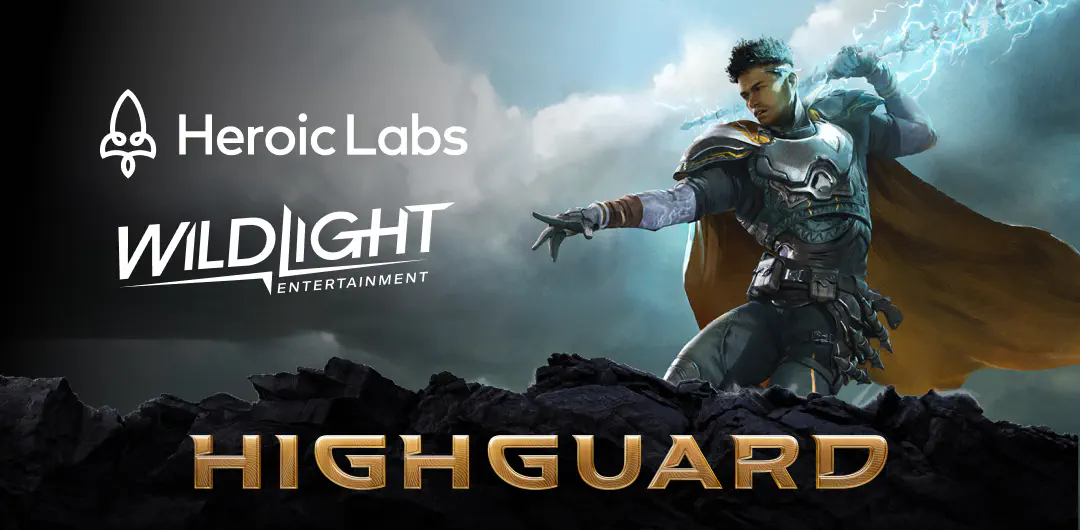
Highguard from Wildlight Entertainment has shipped across PC and console, powered by the Heroic game stack. Nakama handles matchmaking and server-authoritative multiplayer, Satori delivers LiveOps, and Heroic Cloud provides the managed infrastructure for scaling across all three platforms. For us, it represents one of our most technically ambitious cross-platform deployments to date. We’re proud of what our teams have accomplished together.
From Technical Debt to Technical Clarity: Kwalee’s Transformation

UK-based Kwalee made its name during the hypercasual boom, but as that market cooled, the studio shifted its ambitions toward hybrid-casual titles with longer player lifecycles. The issue? Their custom-built backend was expensive and slowed development to a crawl.
With Nakama and Hiro, Kwalee was no longer held back by tech debt and could start thinking architecturally, building reusable modules to be combined and customized per game. As a result, what previously took the team 18 months could now be done in six.
Gram Games: Early Success to Global Scale

The Zynga-owned studio behind Merge Dragons! and Merge Magic! has been using Nakama to power social features like Friends, Dens, and chat across their games. More recently, they’ve expanded their use of Heroic tech with Hiro powering metagame features in their latest title, FruitFall!
It’s been rewarding to watch Gram Games grow from an early adopter to a studio running Heroic tech at truly global scale.
Read the Gram Games case study
Join Us at Brackeys Game Jam 2026.1
Brackeys Game Jam 2026.1 is happening soon, and we’re once again proud to be supporting one of the biggest community game jams out there. Whether you’re a seasoned developer or just getting started, game jams are the perfect excuse to experiment with new ideas, collaborate with fellow creators, and ship something playable in a week.
Planning to add multiplayer or social features to your entry? Nakama is open source and built for exactly this kind of fast-paced prototyping. Pair it with our Unity sample projects and you can have a working backend up and running in minutes.
Come Say Hi!
Our team is going to be on the road even more this year. If you’re attending any of these events, we’d love to meet up:
- DICE Summit – Las Vegas (February)
- GDC – San Francisco (March)
- Nordic Game – Malmö (May)
- Pocket Gamer Connects – Barcelona (June)
Reach out and let’s set up time to chat.
🔋 Nakama Console: More Power for Your Team
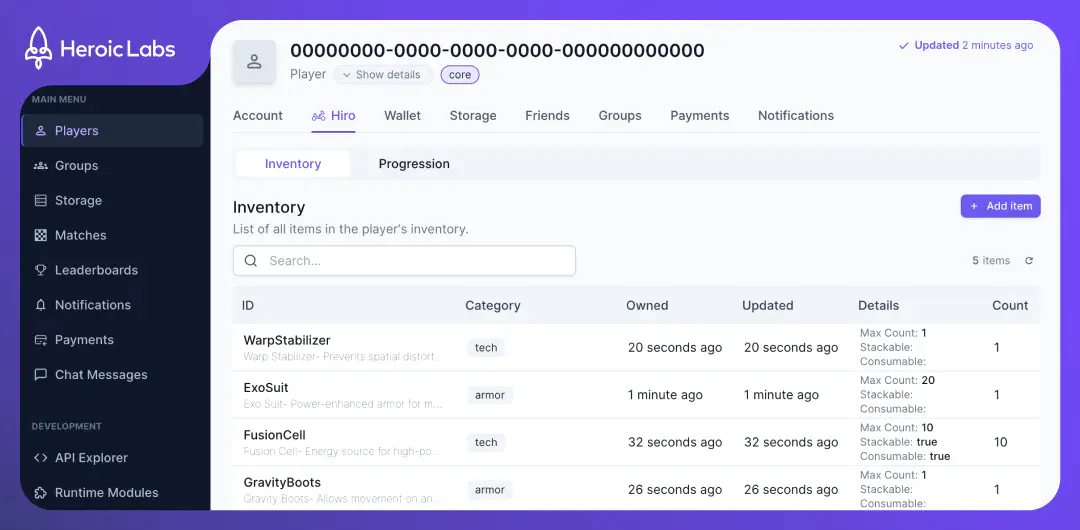
The Nakama Console continues to evolve. This round of updates adds fine-grained permissions so you can give team members access to exactly what they need, built-in Hiro integration that renders player state in proper form views instead of raw JSON, a searchable audit log tracking every action taken through the console, and account export/import for easier debugging across environments.
🛠️ New Integration: Nakama + i3D.net

We’ve released a new Fleet Manager integration between Nakama and i3D.net, the hosting provider behind titles like Rocket League and The Division. This open-source plugin connects Nakama’s matchmaking directly to i3D.net’s ONE API, giving you access to 60+ global points of presence across bare metal and multi-cloud infrastructure (AWS, GCP, Azure).
When players are matched through Nakama, the integration allocates game servers from i3D.net’s fleet. For studios already using i3D.net, this eliminates boilerplate glue code. For those exploring dedicated server options, it opens up proven infrastructure without building custom orchestration.
Check out the integration guide
🦸 Hiro v1.31
Hiro has seen three releases since our last newsletter, delivering a mix of new capabilities and quality-of-life improvements. Some highlights:
- Built-in profanity filter: Enable filtering on usernames, team names, and chat messages out of the box.
- Local time anchoring for Achievements: Achievements, Team Achievements, and Streaks can now specify a UTC time offset to anchor active phases to a player’s local time, useful for global audiences.
- Batch energy spending: The new BatchSpend function in the Energy system makes it easier to handle multiple energy costs in a single call.
- Challenges without invitees: Challenges can now be created without needing initial invitees, opening up more use cases for competitive content.
- Unreal Engine: OnlineSubsystem support now extended to Leaderboards.
🪩 Satori v2.1.5
Satori has continued to ship improvements focused on giving LiveOps teams more control and better visibility. Recent additions include:
- Managed Audiences: Use audiences powered by third-party systems directly in Satori, with built-in permissions and APIs to manage overrides and excludes.
- Direct test messaging: Send test messages to any identity directly from the Satori UI to validate your messaging integrations before going live.
- Event exclusion from analytics: Exclude specific events from activity analytics to keep your engagement metrics clean and focused.
- Smarter session tracking: Satori now associates incoming player events with the most relevant session, even without explicit session information, and tracks the last known active session as a computed property.
Why We Do This
The best infrastructure is the kind you stop thinking about. Whether it’s a AAA launch across three platforms or a studio cutting their development timeline by two-thirds, the goal is the same: get out of the way so teams can ship. If you’re working on something exciting, we’d love to hear about it.
See you in the next one!
Enterprise game backends
See how studios ship multiplayer at scale without rebuilding infrastructure.
Walk through Nakama and Heroic Cloud: org-level access control and managed ops without rewriting your stack. Book a demo to see it in action.
- SOC 2 Type II certified
- Proven at 2M concurrent users
- Dedicated capacity, no CCU limits
